https://www.squamishhelpinghands.ca/wp-content/uploads/2026/09/5DD_6531-2-e1788373636578.jpg

Squamish Food Bank Use is Increasing Due to the Rising Cost of Living

Community News  Food Security  
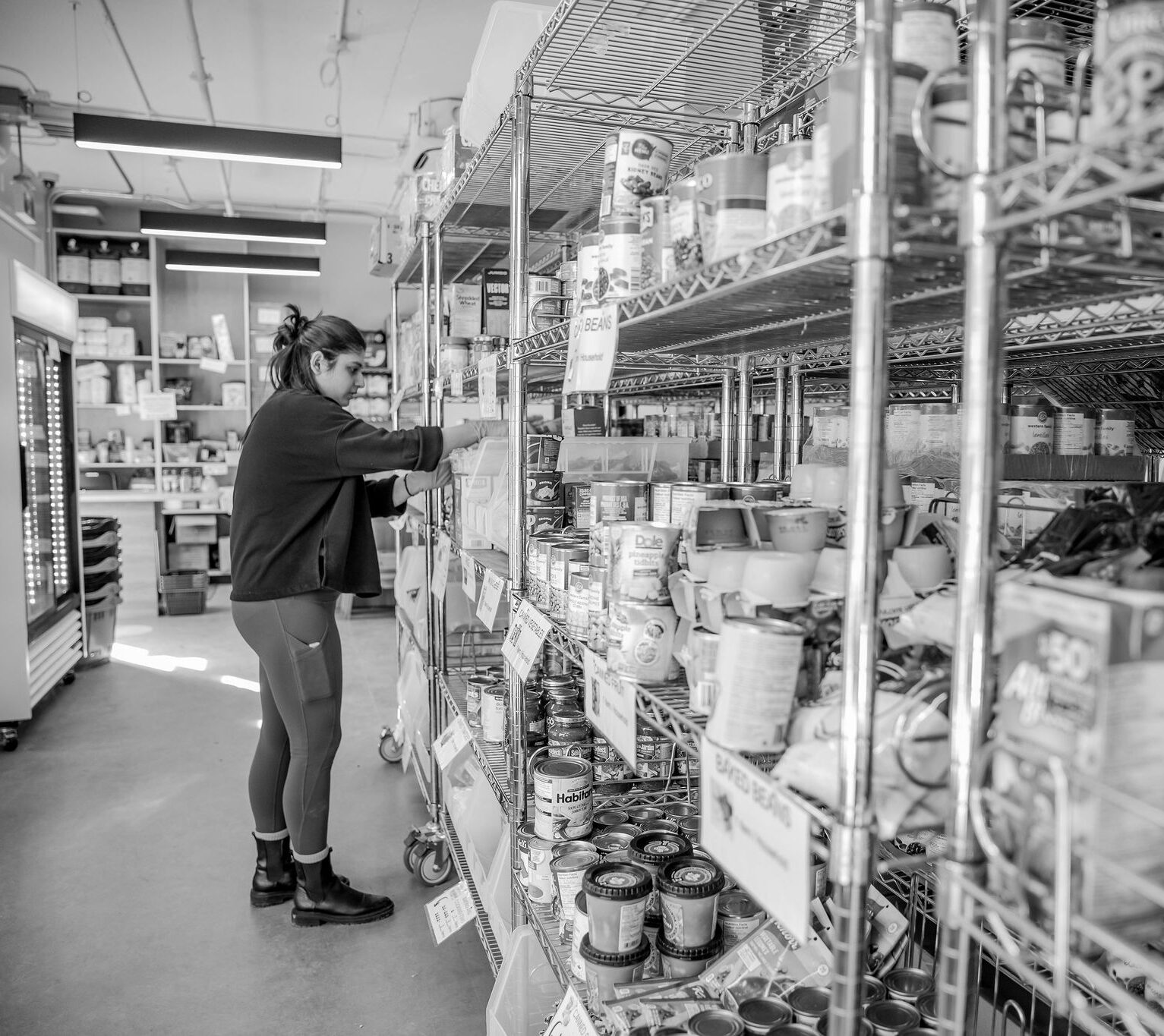
At Squamish Helping Hands, we work hard to ensure that no one in our community goes hungry, yet food bank use is increasing in our town and across the province of British Columbia (BC) due to the rising cost of living.

In the first seven months of 2026, the Squamish Food Bank has already seen an 11 percent year-over-year increase in visits. This upwards trend is supported provincially, with a staggering 79 percent increase in food bank visits across BC since 2019.  

In 2025, the Food Banks BC Hunger Report showed that one in four people identified as food insecure. As a result, organizations that aim to mitigate the impacts of food insecurity have erupted across BC. There are currently six times more food charities in the province than there are grocery stores, as reported by Living Wage BC. 

“Food bank use in Squamish is changing. What was once a temporary support to help people through a difficult period has become a necessity for many working households. More than half of the people accessing our food bank are employed, but in a community with the second-highest cost of living in BC, wages simply aren’t keeping pace with the cost of housing, food and other basic needs. A support which used to exist because of lack of employment, is now about affordability.”
- Lori Pyne, executive director of Squamish Helping Hands. 

Every year Food Banks Canada publishes a Poverty Report Card. This year, BC had the dubious honour of holding the title for the highest provincial poverty rate across Canada, at 13 percent. People simply cannot afford to live in BC on their current salaries, with nearly 1 in 3 workers earning less than the living wage. (A ‘living wage’ is a calculation of the hourly amount that a worker must earn to meet their basic expenses and avoid working poverty.) Living wage is different, and often higher, than the provincially established ‘minimum wage’. Across BC there has been a 200 percent increase in the number of people on Employment Insurance (EI) using food banks since 2019; meaning, more and more people are requiring financial aid in order to eat. There’s an affordability crisis taking place across the province.  

Looking at Squamish, it’s the same story. Food security and low income are inextricably tied. In 2025, Squamish’s living wage was estimated to be $28.00; $9.75 over the minimum wage. This is a dramatic increase from the $25.13 living wage in 2023. However, this increase makes sense when considering the 50 percent increase in Squamish rent over the past five years and 30 percent increase in food costs since 2023. Wages simply aren’t increasing at the same rate as the cost of living. 

Small-town food costs also come with their own unique set of challenges, with fewer retail options and longer transportation distances putting even more pressure on low-income households. In a recent survey of Squamish residents, 73 percent of respondents listed groceries as the factor that most affects their cost of living. As one non-profit worker in Squamish summarized in a Living Wage BC report, “people are sacrificing the food they’re buying because they have a commitment to pay rent”.  

Some are more affected by food insecurity than others. The Hunger Report highlights a worrying 9 percent increase in racialized persons using foodbanks between 2024-2025, their largest recorded demographic increase. The BC Centre for Disease Control found household food insecurity is highest in households where the respondent identifies as Indigenous (30.7%), Arab/West Asian (27.6%), or Black (22.4%). Crucially, food security metrics don’t indicate issues of food sovereignty, either. Food sovereignty, as defined by Sustainability Directory, is the right to healthy and culturally appropriate foods produced through ecologically sound and sustainable methods, and a people’s right to define their own food and agricultural systems. The First Nations Food and Nutrition Study found that 91% of First Nations adults in BC would like more traditional food in their diets but faced barriers to accessing traditional foods. Relying solely on the foodbank means people are limited in their ingredient options, and in their autonomy within the food system; as another Squamish non-profit employee in the Living Wage report said, there’s like a whole loss of culture there”.  

Families are also disproportionately represented among food bank users, with 31 percent of BC food bank clients being children. Likewise, the proportion of two-parent families accessing foodbanks has reached an all-time high of 20 percent, higher than both single parent families and couples with no children. Families are in need of affordable food options, even with two parents’ incomes. This remains true in Squamish, with over 4800 household visits to the foodbank in 2025, compared to the 5888 unique individual visits.  

Moving forward, we know the goal; make nutritious food affordable and available for everyone. As the Squamish Community Foundation outlines in a news release, policies that support local food production, independent grocers, bulk-buy programs and livable wages will facilitate Squamish in achieving this. Let’s help feed our town.  

https://www.squamishhelpinghands.ca/wp-content/uploads/2026/07/IMG_1318-scaled.jpg

Meridy Meikle

Events and Communications
Meridy is the Events and Communications 2026 summer student at Squamish Helping Hands Society. She grew up as a descendent of settlers on the unceeded territory of Sḵwx̱wú7mesh First Nation and calls Brackendale home. She has her BA in International Development from the University of Sussex and has worked in a range of fields, from teen leadership programs to the SPCA to serving some of the first coffees at Fox and Oak. A lover of writing, the outdoors and the continuous improvement of her hometown, she wrote her undergraduate dissertation on settler coloniality within Squamish’s outdoor sector. She is grateful for the opportunity to learn and contribute to the important work done at Under One Roof.

You may also be interested in

View all