A recent study by Wounds Canada found that two out of three individuals experiencing homelessness identified as having an issue with their feet. This is not a new trend. In fact, a 2025 Science Direct article states that foot problems remain clear and unchanged.
Open Door Health, the primary care clinic at Under One Roof offering specialized Foot Care Clinics. This service helps treat acute and chronic foot conditions on a monthly basis, offering a continuity of care and concerted efforts to treat foot challenges.
Increasing public understanding of the unique set of social and health related issues those experiencing homelessness face helps create a more humanistic, empowering health care system. Wounds Canada lists some of these potential contributing circumstances as they relate to an individual’s foot health:
- Mental health issues and one’s ability to practice personal care
- Asylum seekers, refugees and vulnerable migrants presenting locally uncommon foot conditions
- Increased risk of diabetes in socially disadvantaged groups, which causes a higher risk of diabetic foot complications
- Walking long distances, often with heavy bags
- Sleeping upright or on grates, causing oedema or burns
- Repeated exposure to the elements
- Poor nutrition and smoking can cause issues with wound healing, skin integrity and reduced immune function
- Difficulty in access to hygiene
- Not removing shoes/socks at night, for example due to fear of theft
- Access to quality footwear
- Self-treating due to lack of medical attention/no access to healthcare
- Substance use can impact immunity, diabetes, risk, and potential for injury
This list is not exhaustive. Rather, it serves to bring light to the complexity of foot-health related issues.
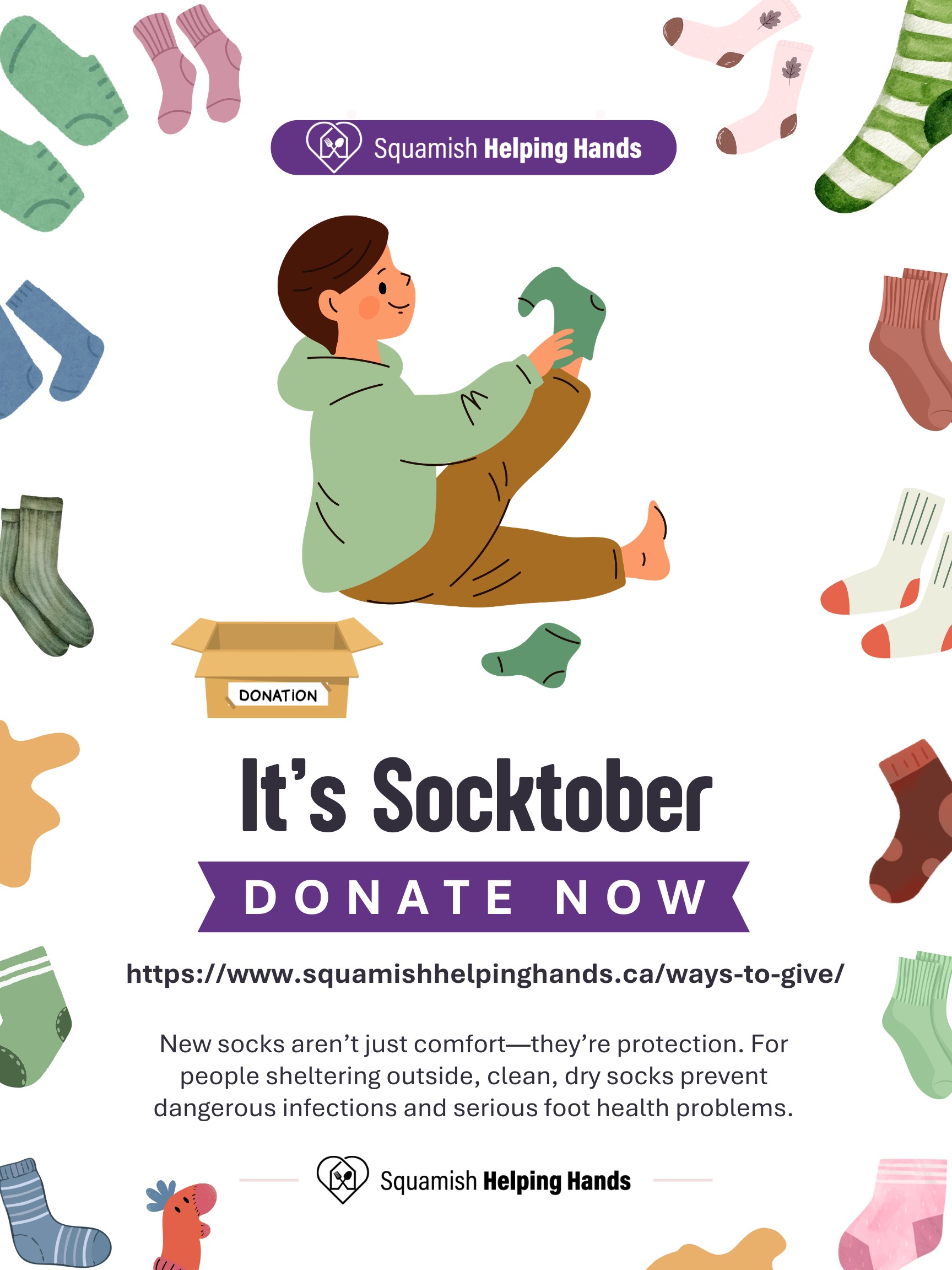
So, Socktober isn’t just about socks. It’s about expanding the conversations we’re having about healthcare and linking solutions to social care. We know that housing has a direct impact on people’s health outcomes, and that housing has never been less affordable in Squamish. As our temperatures begin to drop, Squamish Helping Hands has already had to turn away eight members of our community looking for temporary shelter in September alone. The waitlist for transitional housing continues to grow.
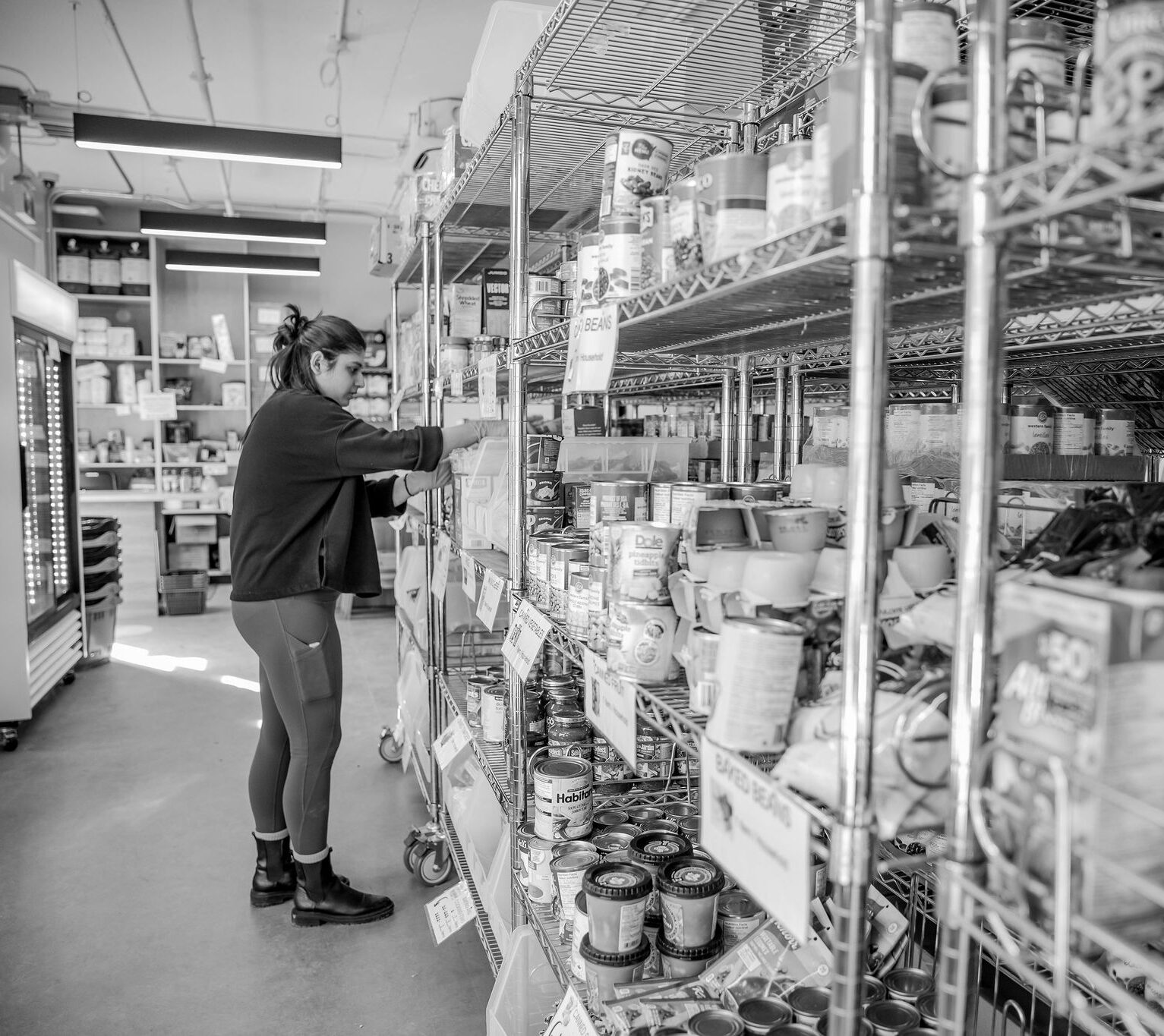
Squamish Helping Hands accepts donations year-round (check out our evergreen list of donations here), but in the colder months special attention is brought to the items that make the biggest impact for those sheltering outside.
Last year, Socktober was an enormous success, raising nearly 2,100 pairs of warm, dry socks to be given out to members of our community experiencing homelessness. This year, we’ve partnered with local schools and businesses to do it all over again. Socks are a small item with a big impact, and we’re so grateful for the rallying support behind this campaign in our community. Note that, when donating, wool/synthetic wicking socks are best!
If you’d like to get involved this October there are collection points across Squamish, including all seven elementary schools, Don Ross Middle School, and Howe Sound Secondary. Donations can also be made to Fox and Oak or directly to 37871 3rd Ave (Under One Roof).
Let’s make this year’s Socktober even bigger than 2025!