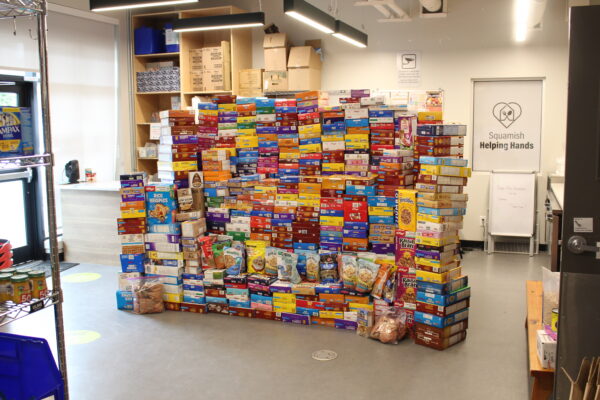
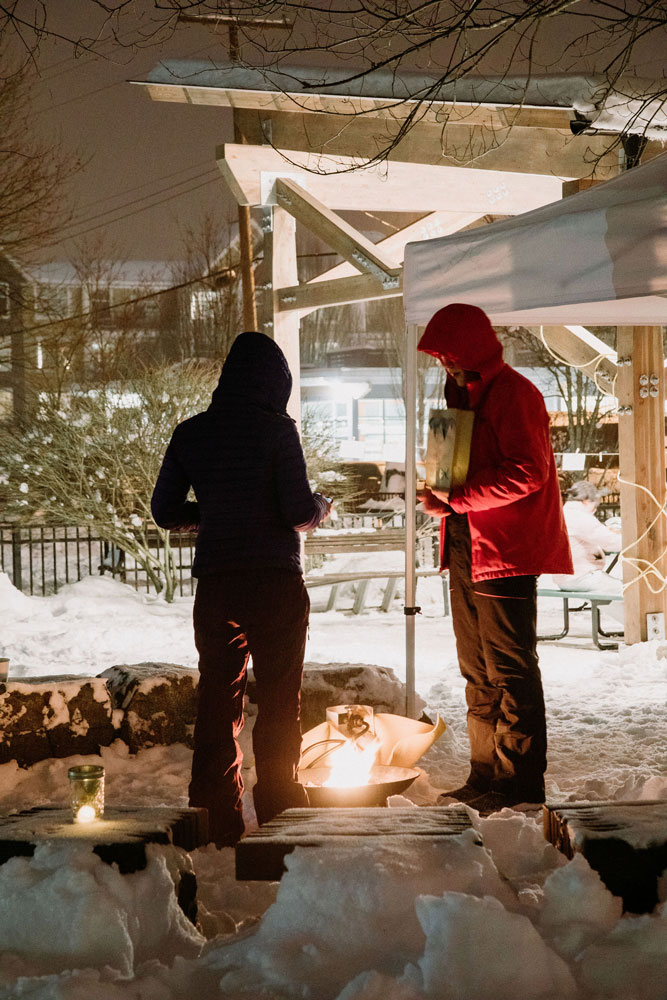
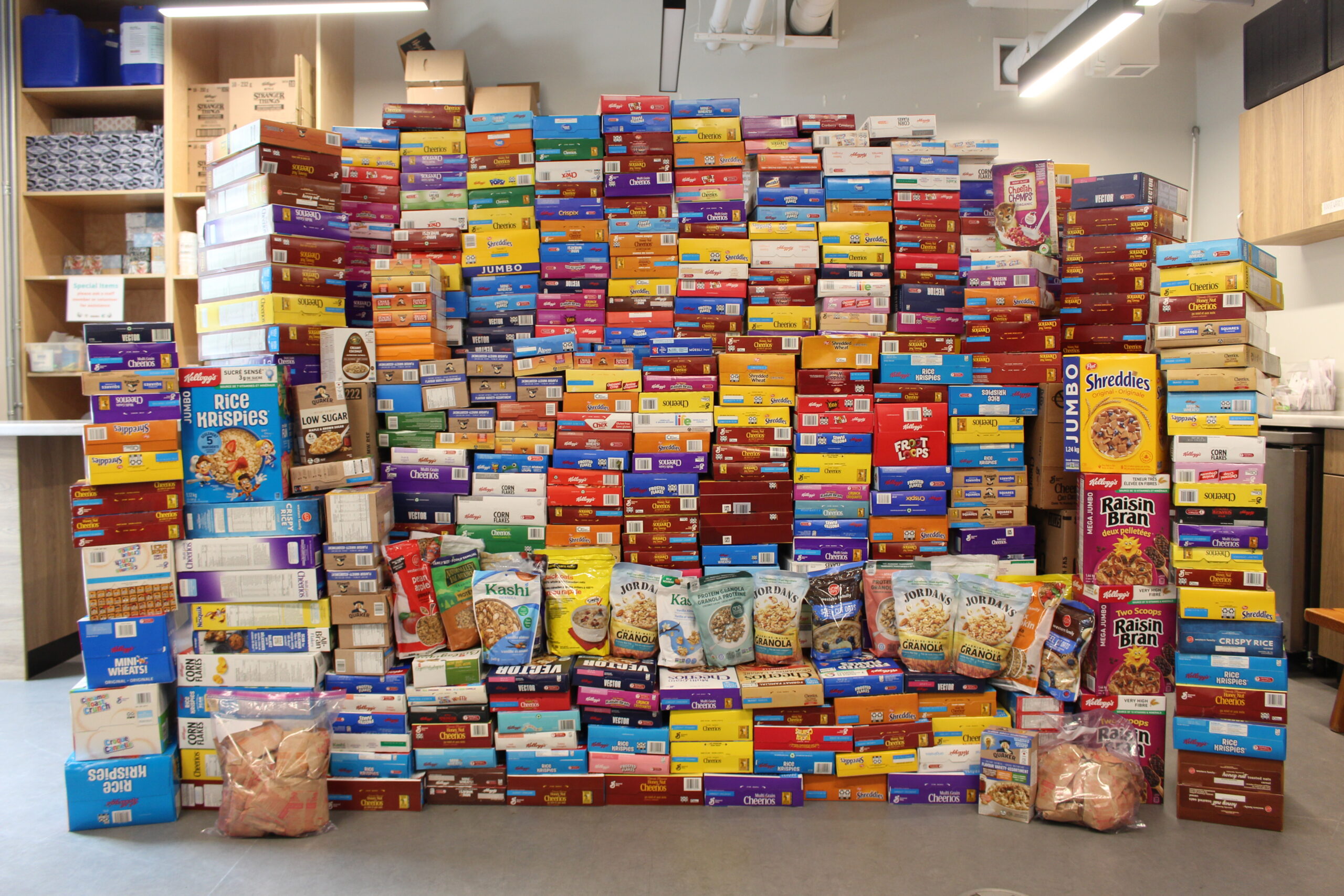
During our 2026 Cereal Drive, we collected 515 boxes from our amazing community!


A safe and healthy community for all.

Cereal was collected through school fundraisers, grocery store pop-ups, and community event campaigns. Thank you to everyone who donated this month and made this fundraiser a reality! If you’d like to continue to support our food bank, Squamish Helping Hands collects unopened, unexpired food donations every day from 9-5. Come stop by.
We run this campaign in June every year for an intentional reason; as schools pause for the summer, so do their school meal programs. In 2025, Squamish CAN served roughly 500 school lunches a day to students at participating SD48 schools, as well as offering food at a drop-in style Breakfast Club. During the summer months, the lack of these school meals means two additional meals a day caregivers must provide.

According to Food Banks BC, one in four British Columbians are facing food insecurity, and a third of them are children. Visits to the Squamish Food Bank show similar trends. In a recent survey of food bank users, we found that more than half of them are working full or part-time. So, we know that people need affordable, low-barrier access to food, and that caregivers may not be at home during working hours to prepare it for their children.
Cereal might not be the perfect food. But, it provides a simple, comforting and cost-effective meal that kids are able to make for themselves and/or their siblings. Many cereals contain whole grains and are often fortified with vitamins and minerals, including iron, calcium, and B vitamins. Cereal can also easily be combined with fruits, milk alternatives, and protein sources to provide nutrition and variation. In short, it’s a relatively nutritious meal that kids can prepare which makes it a staple for many families during the summer holidays.
We know that food insecurity in BC is growing, and the rising cost of living in Squamish will likely continue to contribute to financial challenges for families and individuals. Squamish Helping Hands has had a 10 percent year over year increase in food bank visits from 2024 to 2025. The Squamish Community Foundation echoes this sentiment in their research on the Squamish Living Wage (i.e. calculation of the hourly amount that a worker must earn to meet their basic expenses and avoid working poverty). In 2025, the living wage in Squamish was $28.00, a 4.6 percent increase from the previous year. The cost of food, childcare and housing were the largest contributing factors to the increase, with childcare in our town costing more than in Vancouver.
Busy parents need cereal, and that’s a rallying fact. The need for low-barrier access to food in BC has never been more pressing. We have enough – it’s just about equitable distribution. Every bit counts so please donate if you can.